this article focuses on "scalability assessment of differences in elastic expansion capabilities among u.s. server hosting providers" and compares the differences in elastic expansion capabilities between different hosting providers from the perspectives of architecture, automation, network, storage, and compliance to help companies make more accurate choices.
scalability directly affects application availability and cost efficiency. good elastic expansion can respond quickly when load suddenly increases to ensure user experience; it can release resources when load decreases and reduce expenses. evaluating scalability needs to combine business fluctuation characteristics and sla requirements.
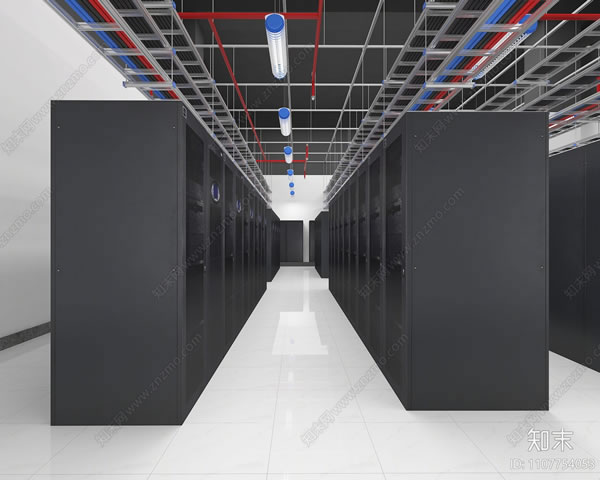
different hosting providers have obvious differences in design concepts, resource pooling and operational maturity. some providers focus on physical machine pooling and hybrid cloud integration, while others focus on automated orchestration and cloud native capabilities. the difference is reflected in the response speed and scaling granularity of elastic expansion.
the architecture determines the expansion limit and flexibility. hosting providers that adopt large-scale resource pooling and multi-availability zone layouts can usually achieve faster instance scheduling and disaster recovery; while traditional hosting based on fixed racks has limited elastic expansion capabilities in a short period of time.
the degree of automation determines the operation and maintenance burden and the accuracy of expansion. supports scaling mechanisms based on custom policies, real-time indicator triggering, and event-driven scaling to achieve on-demand expansion; hosting services that lack mature automation require more manual intervention and reserved capacity.
the network layer is an important link that affects expansion performance. low-latency backbones, elastically scalable bandwidth pools, and programmable networks (such as sdn) can ensure connectivity and throughput during application expansion; network bottlenecks will become performance bottlenecks after expansion.
storage architecture has a significant impact on elastic expansion. it supports horizontal expansion of distributed storage and block storage snapshots and online expansion capabilities, and can maintain data consistency and performance during the expansion process; traditional single-node storage often requires downtime or complex migration during expansion.
the open and stable management api and ecological tool chain can significantly improve the expansion efficiency and automation level. if the hosting provider provides standardized api, terraform/ansible and other integrations, it will make it easier for enterprises to incorporate elastic expansion into ci/cd and automated operation and maintenance processes.
geographic distribution and compliance requirements will affect expansion strategies. hosting providers for different regions in the united states have differences in data sovereignty, network latency, and regional capacity. when choosing one, you need to weigh regulatory compliance, user distribution, and backup and disaster recovery strategies.
quantitative indicators should be used to evaluate scalability: expansion response time, expansion success rate, elastic cost efficiency, network throughput and latency, data consistency window, etc. more reliable evaluation results can be obtained through benchmark testing, fault injection and real traffic replay.
under the framework of "scalability assessment of u.s. server hosters' differences in elastic scaling", it is recommended to develop an evaluation matrix based on business peak characteristics and compliance requirements, give priority to verifying automated scaling and online expansion capabilities of network and storage, and conduct repeatable stress tests and fault drills before purchasing.
- Latest articles
- Cambodia Server Rental Cost Details And Price/performance Comparison Analysis
- Best Practices For Vietnamese Native IP Nodes In SEO Optimization And Regional Testing
- Commercial Scenario Estimation: How Much Does Native IP Cost In Taiwan? Discount Model For Bulk Purchases
- How To Efficiently Communicate With Hostease Hong Kong Server Customer Service To Solve Problems
- Cost Control: Material Selection And Engineering Quantity Estimation Method For Network Cable Routing In German Computer Rooms
- What Qualifications And Network Interconnection Indicators Should You Pay Attention To When Choosing A Hong Kong Service Hosting Computer Room?
- Before Claiming It, You Must Read The Common Hidden Fees And Usage Period Instructions For Hong Kong Server Free Redemption.
- Load Scheduling And Consistency Maintenance Of Taiwan Vps Cn2 High Defense Space In Multi-site Deployment
- Technical Analysis: The Significance Of The Time When The US Military Entered The German Server In Cyber Security Incidents
- Traffic Management Recommendations Teach You How To Optimize Application Communication In A Mobile Card Serverless Environment.
- Popular tags
-

Common Reasons And Solutions For Inaccessible Servers In The United States
This article discusses common causes of inaccessible servers in the United States and their solutions to help users quickly diagnose and resolve problems. -

Discussion On The Security And Technical Advantages Of U.s. Army Servers
this article explores the security and technical advantages of the u.s. army server and analyzes its application in network security and data protection. -

How To Judge Whether The 20 Yuan Us High-defense Cloud Server Meets The Protection Needs Of Short-term Activities
for short-term activities, how to judge whether the us high-defense cloud server marked with a price of 20 yuan can provide sufficient ddos protection, bandwidth flexibility and response capabilities. this guide provides quantifiable assessment points and testing recommendations.